A phone dropping to 4% halfway through a lecture is more than annoying. It can mean losing your timetable, train ticket, group-chat updates or access to notes just when you need them. The best power banks for students are not always the biggest or most expensive ones. They are the ones that fit easily in a bag, charge the devices you actually carry and have enough capacity to get you through a busy day.
For most students, a reliable power bank is one of the simplest upgrades you can make to your everyday tech. The right choice comes down to capacity, charging speed, ports and size – with a few details that are easy to miss before you buy.
What makes the best power banks for students?
A good student power bank should solve a real problem quickly. You may be on campus from morning until late, working in the library, commuting home and using your phone throughout. That calls for dependable backup power, not a bulky battery that stays in a drawer.
Start by thinking about what you need to charge. If it is mainly an iPhone or Android phone, a 10,000mAh model is usually the sensible all-round option. It offers several useful top-ups without taking up much room in a backpack or coat pocket. If you regularly charge a tablet, use mobile data heavily or spend weekends away, stepping up to 20,000mAh can be worth it.
Do not choose by mAh alone. A higher number means more stored power, but it also means more weight, a higher price and a longer recharge time. A compact power bank that you remember to take with you is more useful than a huge one left at home.
5,000mAh: best for light days and small bags
A 5,000mAh power bank is a handy emergency option. It is ideal for a quick phone boost between seminars, a commute or a night out when you do not want to carry much. Many are slim enough to slip into a pocket.
The trade-off is simple: it may not fully recharge larger phones more than once after energy is lost through charging. It is best for students who have regular access to a wall socket but want a backup for the unexpected.
10,000mAh: the practical everyday choice
For most people, 10,000mAh hits the sweet spot. It can normally provide around one and a half to two full phone charges, depending on the phone, battery health and charging method. It is compact enough for daily use and capable enough for a full day on campus.
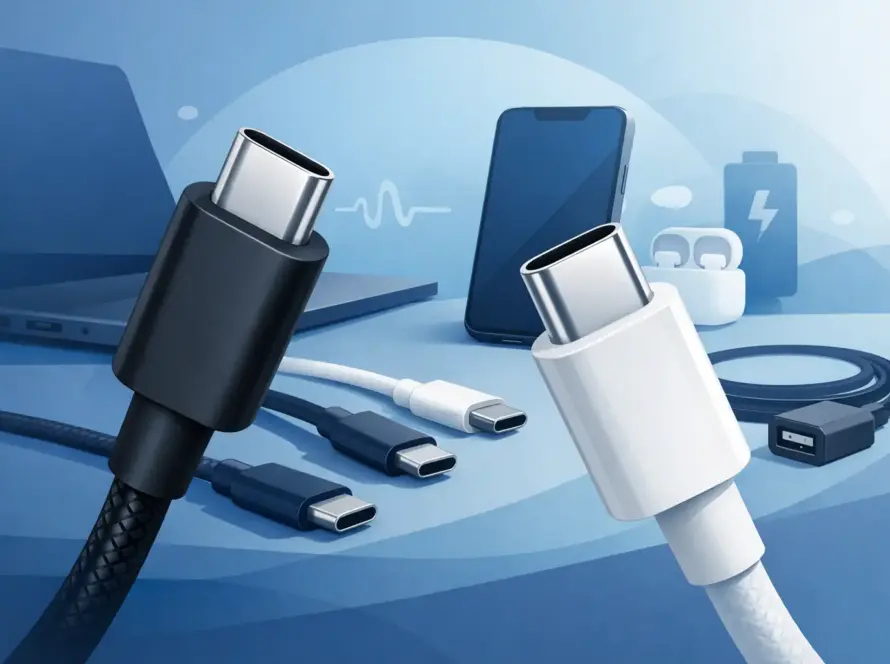
Look for a model with USB-C input and output. USB-C is now common across Android phones, newer iPhones, tablets, headphones and many laptops, so it reduces the number of cables you need to carry. If you use an older iPhone, choose a power bank with a USB-C port and pair it with the correct Lightning cable.
20,000mAh: best for long days, tablets and trips
A 20,000mAh power bank is better for demanding use. It suits students with a tablet for note-taking, long train journeys, placement days, festivals or shared accommodation where plug sockets are always in demand. You will get more phone recharges and far more breathing room if you are also topping up earbuds or a smartwatch.
However, these models are noticeably heavier. Check the dimensions before buying, especially if you already carry a laptop, books and a water bottle every day. They are excellent for travel and heavy users, but may feel like overkill for someone who only needs one phone top-up.
Charging speed matters as much as capacity
A large power bank is frustrating if it charges your phone slowly. Look for fast charging support, especially USB-C Power Delivery, often shown as PD. A 20W USB-C output is a strong starting point for modern phones and can make a big difference when you only have 20 minutes before your next class.
Your phone also needs to support fast charging to benefit. Most newer models do, but charging speeds vary by brand and device. Using a poor-quality or damaged cable can also slow things down, so do not overlook the cable in your setup.
Pay attention to the power bank’s input speed too. This tells you how quickly the power bank itself can recharge. A 20,000mAh model can take a long time with an old, low-power plug. With a suitable USB-C charger and cable, you can refill it much faster overnight or between busy days.
Choose the ports you will genuinely use
One USB-C port is enough for a student who only charges one phone at a time. Two ports are more flexible if you often carry headphones, a smartwatch or a tablet. A USB-C and USB-A combination works well if you still have older cables, while dual USB-C ports make more sense for a newer set of devices.
There is one small catch with multi-port charging: the total output is often shared. A power bank may charge one device at full speed but slow down when a second device is connected. That is not necessarily a fault. Check the stated total output if fast charging two devices at once is important to you.
Built-in cables can be convenient, particularly if you are always forgetting leads. They save space and make the power bank ready to use. A separate cable is usually more flexible, though, and easier to replace if it wears out. For everyday student use, a short USB-C cable tucked into your bag is often the simplest answer.
Size, weight and battery level are worth checking
A power bank should be easy to live with. Slim models are ideal for library sessions and commuting because they sit neatly beside a phone or notebook. Larger units are better for travel but can pull on a pocket or add unwanted weight to a packed bag.
Choose a model with clear battery indicators. Four LED lights are basic but useful; a digital percentage display is even better when you need to know whether it will last through the day. It is a small feature that prevents guesswork.
Wireless power banks are another option for compatible phones. They are tidy and convenient, especially magnetic models that attach to the back of a handset. The compromise is that wireless charging is usually slower and less efficient than a cable. For an urgent charge before a lecture, wired charging remains the better choice.
Do you need a laptop power bank?
Most standard phone power banks will not charge a laptop properly. Laptops need more power, commonly 45W, 65W or higher, along with USB-C Power Delivery support. If your laptop charges via USB-C, check its required wattage before buying anything.
A laptop-capable power bank can be useful for coursework sessions away from sockets, but it is larger and more expensive than a normal phone charger. It also will not suit every laptop, particularly models with dedicated charging connectors or high power demands. For many students, it makes better sense to buy a compact phone power bank and keep a proper laptop charger in their bag.
Get better value from your power bank
Price matters, but the cheapest option is not always the best value. A poorly made battery may charge slowly, lose capacity quickly or have unreliable ports. Choose a reputable unit with clear capacity, output and safety information rather than an unknown model with exaggerated claims.
The most useful features are straightforward: USB-C charging, fast output, a sensible capacity and a solid build. Extras such as a torch, kickstand or wireless charging can be useful, but only if they match how you use your devices. Paying more for features you will never touch is not a saving.
At InstaTech, practical accessories are chosen for everyday problems: keeping your phone, tablet and other essentials ready when the nearest socket is taken. Match the power bank to your usual day, then keep a reliable cable with it so it is always ready to earn its place in your bag.
A few habits that help it last
Charge your power bank before it is completely empty and avoid leaving it for months without use. Store it somewhere cool and dry, rather than under bedding or in direct sunlight. If the case becomes swollen, unusually hot or damaged, stop using it and replace it safely.
When travelling by air, power banks must normally stay in hand luggage, not checked baggage. Most everyday models are within airline limits, but rules can vary, so check your airline before you leave.
The best choice is the one that removes charging stress from your day without adding bulk or complication. A slim 10,000mAh USB-C model will suit most students brilliantly; move to 20,000mAh when longer days, tablets and travel make that extra capacity genuinely useful.