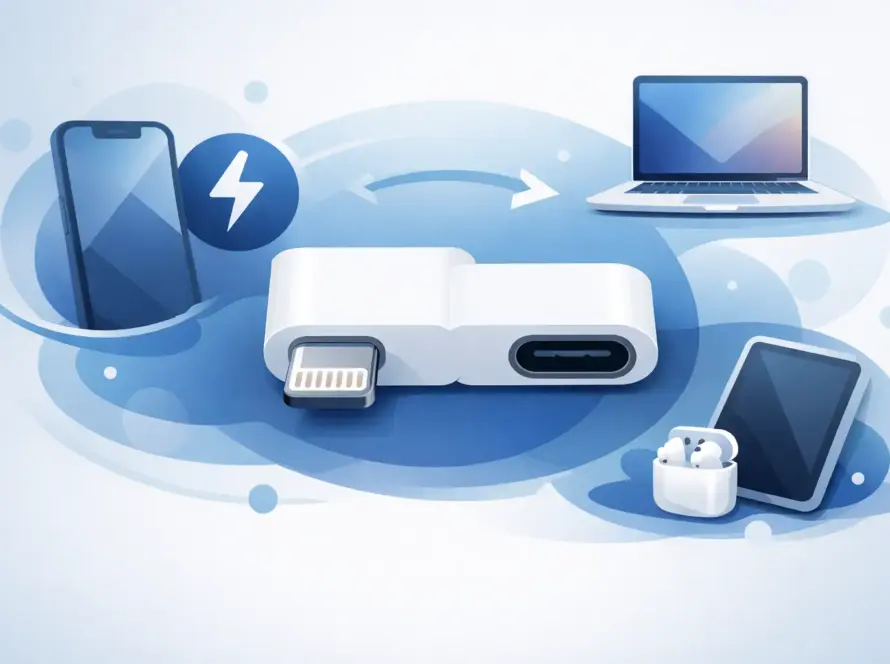
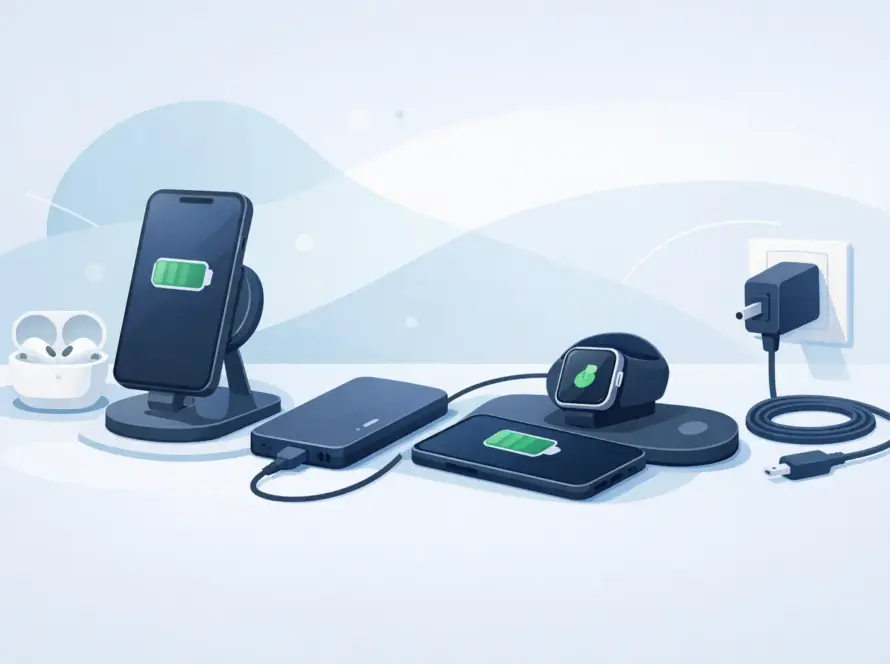
You only notice a bad power bank when your phone hits 6% in an airport queue, your boarding pass is on screen, and the charger in your bag is either too slow, too bulky, or already empty. That is why choosing the best power bank for travel is less about fancy extras and more about getting the basics right – enough capacity, the right ports, safe airline-friendly sizing, and charging speeds that keep up with your day.
For most people, the right choice is not the biggest model on the shelf. It is the one that fits the way you travel. A student heading home for the weekend, a commuter taking a work trip to Manchester, and a family flying abroad will not all need the same setup. If you want value, reliability, and less hassle at the gate or on the train, it helps to know what actually matters before you buy.
What makes the best power bank for travel?
The best travel power bank balances four things: capacity, size, charging speed, and compatibility. Miss one of those and the whole product becomes less useful, even if the price looks good.
Capacity is the first thing most shoppers check, and for good reason. It is measured in mAh, and while bigger numbers sound better, they are not always more practical. A 5,000mAh power bank is compact and easy to carry, but it may only give your phone around one full charge depending on the handset. A 10,000mAh model is the sweet spot for many travellers because it offers a couple of phone top-ups without taking over your bag. A 20,000mAh unit is better for long journeys, multiple devices, or days away from a plug socket, but it will be heavier.
Then there is speed. If your power bank charges slowly, it can turn a quick stop at the station into a frustrating wait. Look for USB-C output with fast charging support if you use a newer phone, tablet, or wireless earbuds. If you have older devices or accessories, a mix of USB-C and USB-A ports is usually the most practical choice. One port can be enough for light travel, but two or three are much more useful if you are charging a phone and earbuds at the same time.
Compatibility matters more than many people expect. Some power banks are great for phones but too weak for tablets or laptops. Others can charge a laptop but are oversized for everyday use. If you only need backup power for your iPhone, Samsung, Pixel, or similar handset, you do not need to pay laptop-grade prices. If you travel with a USB-C laptop, check the wattage carefully. A power bank that cannot deliver enough output may charge very slowly or not at all.
The right size depends on how you travel
If you mostly travel by train, coach, or for short city breaks, a 10,000mAh power bank is often the best fit. It slips into a jacket pocket or small backpack, keeps your phone alive for maps, messages, tickets and music, and usually avoids the extra bulk that comes with high-capacity models. For everyday consumers, this is where value and convenience meet.
If you are taking longer flights, using your phone heavily for photos and navigation, or charging more than one device, 20,000mAh starts to make more sense. It gives you more breathing room and can handle a long day without needing a wall socket. The trade-off is simple: more battery means more weight. If you already carry a laptop, toiletries, and chargers, that extra weight can become annoying fast.
Smaller 5,000mAh power banks still have a place. They are useful as emergency backup, especially if you want something slim enough to fit in a trouser pocket or small handbag. They are less ideal as your only charger on a full travel day, particularly if your phone battery is ageing or you use power-hungry apps.
Airline rules matter more than brand claims
One of the easiest ways to avoid travel stress is to buy a power bank that fits standard airline expectations. In most cases, power banks must be packed in hand luggage, not checked baggage. Capacity limits are usually measured in watt-hours, but many products show only mAh, which can confuse buyers.
For most mainstream travel power banks, especially 10,000mAh and 20,000mAh models, you are typically within the commonly accepted limit for personal use. Still, airline policies can vary, and it is worth checking before you fly. If you travel regularly, choosing a clearly labelled, reputable model is the safer move. A no-name power bank with vague specs is never a bargain if it causes problems at security.
This is also where build quality counts. A solid casing, reliable battery cells, and basic protections against overheating, overcharging and short circuits are not luxury features. They are what make a power bank worth carrying in the first place.
Features worth paying for, and features you can skip
Not every extra feature is useful. Some genuinely improve daily use, while others mainly look good on the box.
A digital battery display is helpful because it tells you exactly how much charge is left. Four tiny LED dots are workable, but they are less precise. Integrated cables can also be convenient if you regularly forget to pack one, though they may not be as durable as a separate good-quality cable.
Fast input charging is another feature worth having. It means the power bank itself recharges more quickly, which matters if you are turning it around overnight in a hotel or topping it up before leaving home. Pass-through charging, where the power bank charges a device while also charging itself, sounds handy but varies in quality, so it is not always essential.
Wireless charging on a power bank is more mixed. It can be useful for quick top-ups, especially with earbuds or newer phones, but wired charging is usually faster and more efficient. For travel, simple and dependable often wins.
Best power bank for travel if you use more than a phone
If your travel kit includes a tablet, handheld console, camera accessories, or even a USB-C laptop, do not buy based on capacity alone. Wattage becomes the key detail. A high-capacity power bank with low output may still struggle with larger devices.
For tablets and larger gadgets, you will usually want a power bank with stronger USB-C Power Delivery support. For laptops, this becomes even more important. Some lightweight laptops can charge from a decent USB-C power bank, but others need far more power than a compact travel model can provide. If your device has specific charging requirements, match them properly before you buy.
This is where many shoppers overspend or undershoot. They either buy a massive unit they rarely need, or they choose a cheap compact charger that cannot support their gear. The best option is the one that matches your actual setup, not the one with the biggest figure on the packaging.
A quick buying rule for most travellers
If you want a straightforward answer, here it is. For most people, the best power bank for travel is a 10,000mAh or 20,000mAh model with USB-C fast charging, at least two ports, and clear safety certification. That covers the needs of most phones, earbuds, and light tablet use without making your bag heavier than it needs to be.
If you travel light and only need insurance against a flat phone, go smaller. If you are away for long periods, using multiple devices, or working while travelling, go larger. There is no perfect one-size-fits-all model, but there is a clear sweet spot for most everyday users.
What shoppers often get wrong
Many people buy on capacity alone and ignore recharge time. A large power bank that takes ages to refill can be inconvenient if you are moving between hotels, trains and airports. Others focus only on price and end up replacing a poor-quality unit after a few trips.
Another common mistake is carrying the wrong cable. Even the best power bank becomes useless if you have packed the wrong connector for your device. It sounds obvious, but it happens all the time. A good charger setup is not just the power bank itself. It is the power bank, the right cable, and the right plug charger working together.
It is also worth thinking about your usual battery habits. If your phone already struggles to last until lunch, your travel charger needs to do more work than someone with a newer handset. A realistic choice will save you more money than buying twice.
For shoppers who want quick delivery, fair pricing and no guesswork, InstaTech keeps it simple: choose a power bank that suits your actual journey, not just the biggest battery on the shelf. The right one should feel easy to carry, quick to use, and reliable when you need it most.
A good travel power bank does not need to be complicated. It just needs to keep your devices going when the plug socket is nowhere in sight, and that is usually the difference between a smooth trip and an avoidable headache.